

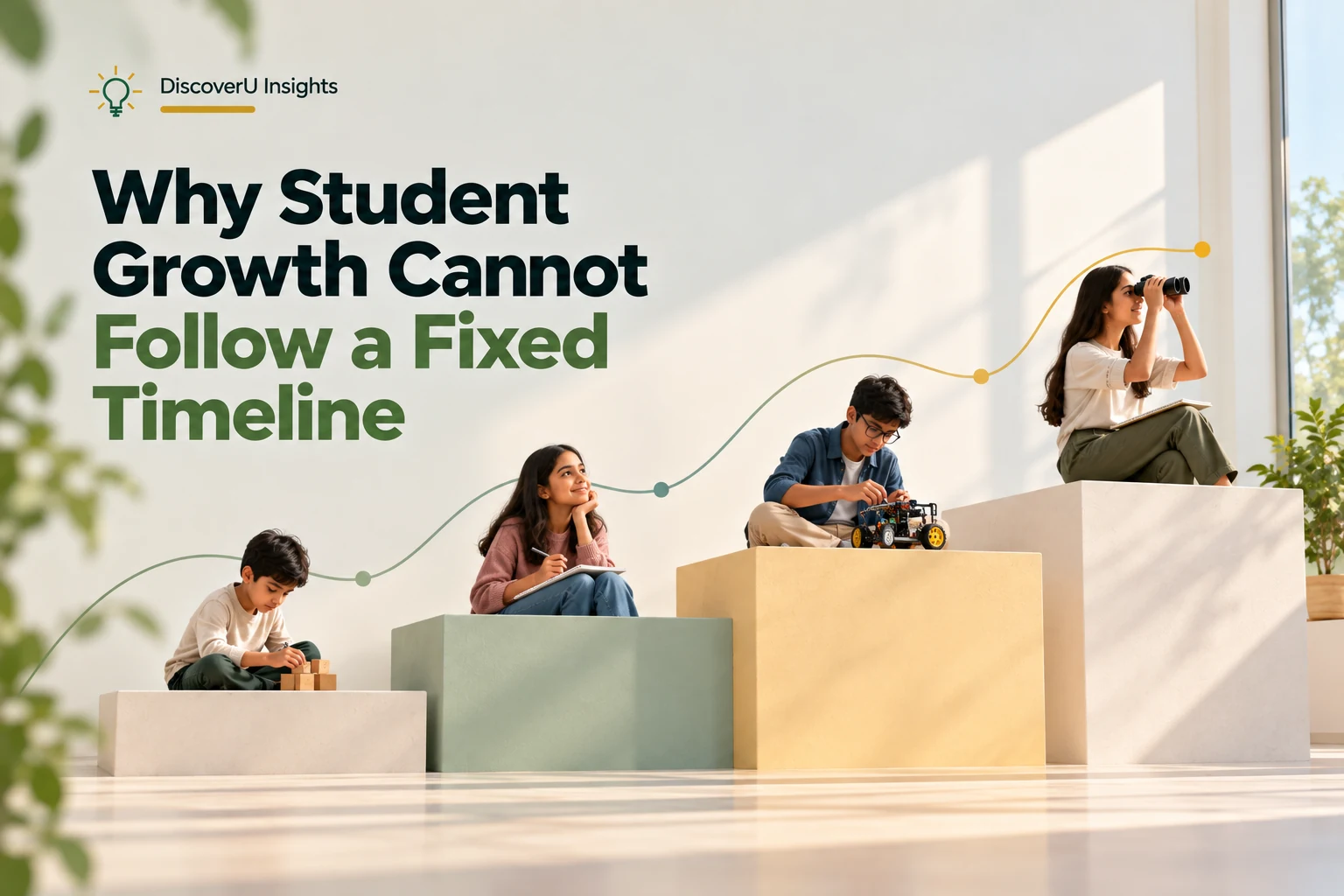
We often expect students to reach certain milestones at certain ages.
But development doesn't always work like a calendar.
A student may become confident early. Another may take longer to speak up. One may discover a strong interest quickly, while another may need many different experiences before something begins to click.
Growth Has Its Own Rhythm
Think about learning to ride a bicycle.
One child may balance quickly.
Another may need several attempts.
Both can eventually move forward — just through different timelines.
Student development can work in a similar way.
Progress may come gradually, unexpectedly or after repeated opportunities.
A Timeline Can Show Progress. It Can't Define It.
Age and grade provide useful context, but they don't tell the complete story.
To understand growth more meaningfully, we also need to notice:
- What experiences a student has had
- What they have had opportunities to practise
- What they are beginning to understand
- Where they are showing progress
- What they may be ready to explore next
This is why DiscoverU's approach focuses on development through repeated experiences, reflection and emerging patterns over time, rather than expecting one fixed sequence for every student.
Growth doesn't need to happen on the same schedule.
It needs the time, experience and opportunity to happen.