

A score can tell us where a student performed at a particular moment.
But it cannot always tell us why.
A student may perform differently depending on the task, environment, level of challenge, confidence, prior experience or opportunity they have had.
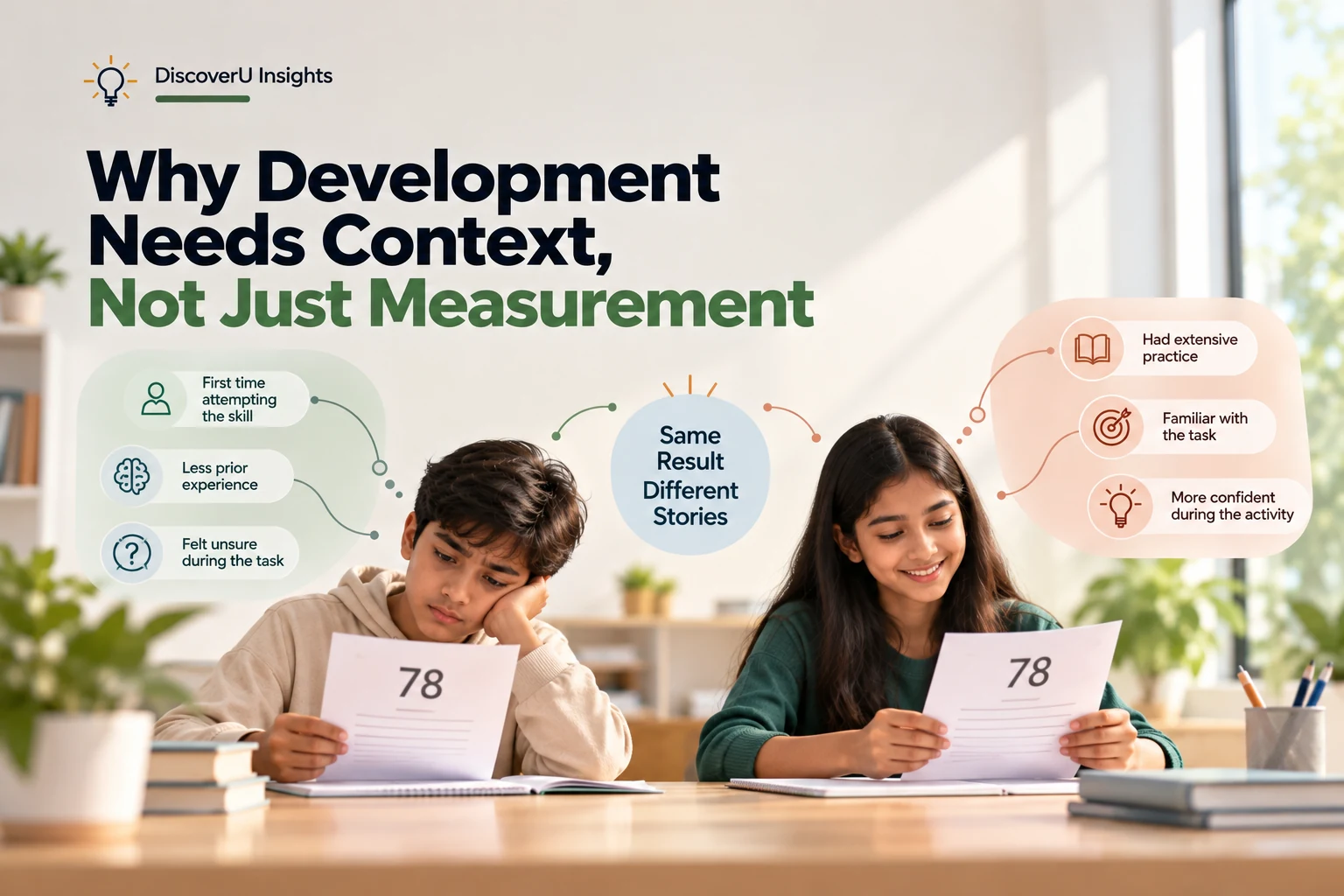
The Same Result Can Tell Different Stories
Imagine two students receive the same result.
One may have had extensive practice.
Another may be attempting the skill for the first time.
The number is the same.
The context is not.
That is why understanding student development requires more than collecting measurements.
Look at What Happened Around the Result
Useful context can include:
- Experience — What opportunities has the student had?
- Process — How did they approach the task?
- Response — What happened when they faced difficulty?
- Practice — Have they had opportunities to improve?
- Progress — What has changed over time?
These details can help turn an isolated result into a more meaningful picture.
Measurement Has a Place
This doesn't mean measurement is unimportant.
It means measurement works better when considered alongside experience, observation, reflection and progress over time.
DiscoverU follows this broader philosophy by using varied experiences and repeated evidence rather than relying on one activity or result to define a student.
A number can record a moment. Context helps us understand the journey behind it.