

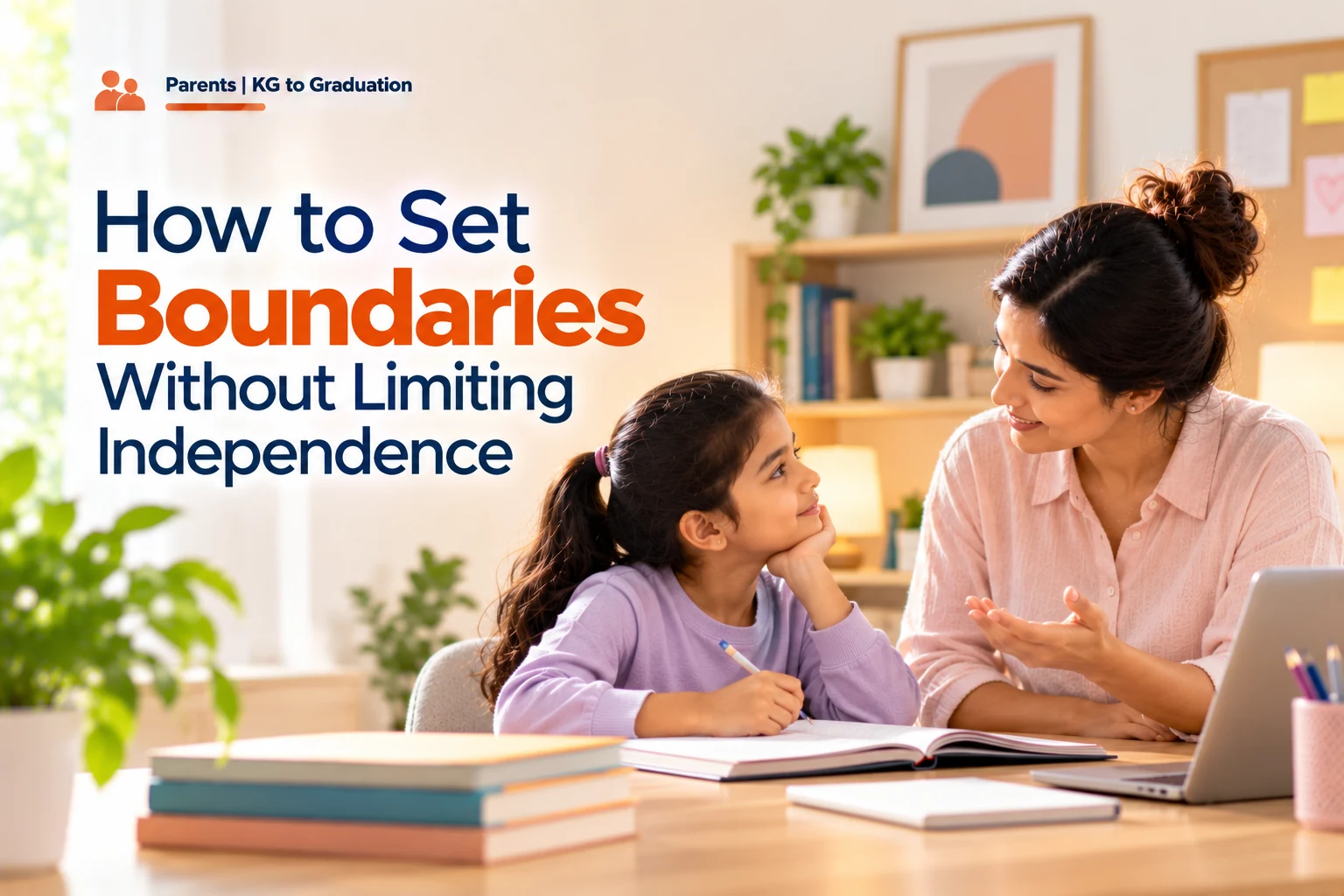
Children need limits to feel secure—but they also need space to make choices, take responsibility and become independent.
The challenge for parents is finding the balance between guiding a child and controlling every decision.
A Common Situation
Your child wants to play before finishing their responsibilities.
Instead of simply saying:
“No. Finish everything first.”
Try:
“Your work needs to be completed today. You can decide whether you want to finish it before dinner or after your break.”
The boundary stays.
The child still gets a choice.
Think: Non-Negotiable vs Flexible
Non-negotiable:
Safety, respectful behaviour, important responsibilities and healthy routines.
Flexible:
Choice of activity, order of tasks, hobbies, clothing preferences or how they organise their time.
What Children Learn
Healthy boundaries can help children develop:
- Responsibility
- Decision-making
- Self-discipline
- Confidence
- Understanding of consequences
The Goal Isn't Obedience Alone
A good boundary doesn't simply make children follow instructions.
It helps them understand why limits exist and how to make responsible choices within them.
DiscoverU encourages children to make choices, take responsibility and learn through real experiences.
Set boundaries that provide direction—while leaving room for independence.